
- 1. INTRODUCTION
- 2. LITERATURE REVIEW
- 3. METHODOLOGY
- 4. RESULTS
- 5. DISCUSSION
- CONCLUSION
- THEORETICAL IMPLICATIONS
- PRACTICAL IMPLICATIONS
- LIMITATIONS OF THE STUDY AND FUTURE RESEARCH
- LIST OF ABBREVIATIONS
- AUTHOR'S CONTRIBUTION
- ETHICAL STATEMENT & INFORMED CONSENT
- AVAILABILITY OF DATA AND MATERIALS
- FUNDING
- CONFLICT OF INTEREST
- ACKNOWLEDGEMENTS
- DECLARATION OF AI
- APPENDIX A QUESTIONNAIRE
- REFERENCES
How Cloud-Based Accounting Information System (CAIS) Capabilities Influence Performance Outcomes in SMES of UAE
 DOI:
DOI:
 PDF
PDF
⬇ Downloads: 15
1Department of Business Studies, Bahria University, Karachi, Pakistan
Received: 22 April, 2026
Accepted: 08 August, 2026
Revised: 03 August, 2026
Published: 01 September, 2026
Abstract:
Introduction: This study aims to explore the association between the capabilities of cloud accounting information systems (CAIS) and the performance of small and medium enterprises (SMEs) in the United Arab Emirates (UAE). This study examines the impact of CAIS adoption, automation, and integration with enterprise resource planning (ERP) on the speed of financial decision-making, accuracy of financial reporting, and operational efficiency based on the resource-based view and dynamic capability theory.
Methodology: Data were gathered using a structured questionnaire and analysed using partial least squares structural equation modelling (PLS-SEM) from 330 SME owners, finance managers, and accounting professionals.
Results: The results highlight the benefits of adopting CAIS for faster financial decision-making and automation to achieve greater reporting accuracy and efficiency. The integration of ERP had the highest positive impact on all performance outcomes. The study also establishes that the capabilities available to a CAIS are organisational resources which add value to the performance of SMEs in various ways.
Conclusion: The results have implications for theory and can inform SME management practices in enhancing SME performance by adopting integrated cloud accounting solutions.
Keywords: CAIS adoption, SMEs, ERP integration, automation, UAE.
1. INTRODUCTION
The United Arab Emirates (UAE) is highly dependent on SMEs, with over 94% of all registered businesses and around 60% of the non-oil GDP attributable to this sector (Johnson, 2025). Despite this economic burden, available evidence suggests that less than 50% of UAE SMEs are currently completely digitalised in their accounting processes, and a growing number of SMEs are using partially digitalised or manual accounting systems, which hinders their ability to complete financial reporting and make timely financial decisions (Jabbar et al., 2025). One of the main challenges for SMEs is limited access to real-time financial information, fragmented reporting, and slow managerial decision-making, which persist and hinder the responsiveness and competitiveness of SMEs (Hojnik & Huđek, 2023). The introduction of cloud accounting information system (CAIS) technology has been suggested as a solution to address these inefficiencies (Rahman & Hossain, 2024). The UAE Government’s initiatives (UAE Vision 2031 and their associated SME digitalisation programmes) have helped promote awareness and adoption of cloud technology, and organisations throughout the Middle East and North Africa (MENA) are turning to digital systems to improve transparency and governance and drive performance (UAE Government, 2025). However, there is evidence that CAIS adoption among UAE SMEs is still inconsistent and largely tactical, with many firms using cloud-based tools for basic bookkeeping and failing to fully embrace enterprise resource planning (ERP) integration and automation (Mhaskey, 2024). Previous research based on the resource-based view (RBV) and dynamic capability theory (DCT) indicates that CAIS capabilities serve as valuable, rare, and hard-to-imitate organisational resources which can be reconfigured for financial and operational value creation (Ashrafuzzaman, 2024; Owusu et al., 2024). Prior studies have also shown that digital transformation capabilities go beyond the actual use of technology and help create value in the organisation in terms of governance, sustainability, and strategic decision-making (Yue et al., 2025). Together, this literature confirms that digital accounting technologies are significant for organisational performance and have mostly ignored CAIS adoption as an all-or-nothing phenomenon.
Although the concept of digitalisation is gaining momentum, empirical studies on the relationship between the dimensions of CAIS (adoption depth, automation extent, and ERP integration) and performance outcomes among UAE SMEs are still very limited. Most previous studies have concentrated on large companies and developed countries, defined CAIS as a dichotomous phenomenon, and ignored the level of system use and certain constraints facing SMEs, including resource constraints and managerial IT skills (Rahman & Hossain, 2024). Additionally, previous research has failed to separately address adoption depth, extent of automation, and ERP integration as organisational capabilities, limiting the ability to understand whether performance benefits are delivered from greater intensity of system use, extent of process automation, or ERP cross-functional integration (Akpe et al., 2022; Mujalli et al., 2024). For UAE SMEs, regulatory requirements, state promotion of digitalisation, and resource limitations collectively impact technology adoption and use (Hojnik & Huđek, 2023; Sola, 2024), whereas attitudes among organisations and expectations among stakeholders significantly influence the implementation of performance-enhancing practices (Belas et al., 2026).
Thus, this study investigates the impact of three different capabilities of CAIS on three performance indicators, namely, speed of financial decisions, accuracy of financial reporting, and efficiency of operations, for UAE SMEs. A cross-sectional survey was conducted with 330 SME owners, finance managers, and accounting professionals who have direct experience in CAIS, and the hypothesised relationships were evaluated using partial least squares structural equation modelling (PLS-SEM). This study makes three important contributions. First, it breaks down digital accounting capability into three dimensions: adoption of CAIS, extent of digital automation, and integration with ERP, instead of using digital accounting maturity as a single construct. Second, it shows that the implementation of CAIS does not necessarily improve all performance measures; however, CAIS implementation has a significant impact on the speed of financial decisions but not on the accuracy of financial reporting or operational efficiency. Third, it establishes ERP integration as the most relevant function, having a strong positive impact on all three performance results, and provides actionable information for SMEs to take their cloud computing journey forward to build a digital accounting ecosystem. The remainder of this paper is organised as follows. The following section reviews the theoretical framework and formulates the study hypotheses. This is followed by a description of the research methodology, presentation of the results, and a discussion of the results in relation to previous theory and evidence. The last part of this paper summarises and draws theoretical and practical implications.
2. LITERATURE REVIEW
2.1. Theoretical Framework
The resource-based view (RBV), as presented by (Barney, 1991), states that companies can gain competitive advantage if they have resources that are valuable, rare, inimitable, and organised. In this study, CAIS capabilities such as adoption, automation, and ERP integration are defined as strategic resources of the organisation that enable financial and operational performance (Owusu et al., 2024). Dynamic capability theory (DCT) by (Teece et al., 1997) is an extension of this theory, which aims to explain how firms detect opportunities and react to them by modifying their resources. The two theories are combined in the current study; the resource-based view helps to understand the competitive value of CAIS capabilities, whereas the dynamic capability view helps to understand the need for capabilities to be actively reconfigured and integrated to create performance outcomes. The three capabilities of CAIS are theorised to be separate and not a single digital maturity construct. Adoption is a measure of system use as a resource possession dimension; automation is a measure of process execution capability to minimise manual effort and reconfigure operational routines; and ERP integration is an advanced measure of cross-functional capability to synchronise information resources across organisational units (Cho & Linderman, 2020; Faccia & Petratos, 2021; Ren, 2022). Performance outcomes are the tangible outcomes of the effective use of these capabilities and include financial decision speed, reporting accuracy, and operational efficiency, and serve as the theoretical basis for conducting the hypotheses presented below.
2.2. Hypotheses Development
2.2.1. CAIS Adoption and Performance Outcomes
CAIS adoption is defined as the degree to which CAIS is incorporated into day-to-day financial tasks, reporting, and information access routines in an organisation (Lutfi, 2022). In the resource-based view approach, deeper adoption is considered a more valuable and internalised organisational resource; whereas, in dynamic capability theory, firms that adopt the resource intensively are better equipped to adapt their information-processing routines to changing conditions (Owusu et al., 2024; Heikinheimo et al., 2025). Unlike the binary measure of adoption, adoption depth reflects the frequency, extent, and degree to which the system is used; a higher depth should be associated with the strengthened capacity of managers to access, interpret, and utilise financial information during actual operations (Sihotang et al., 2024).
One of the most significant advantages of cloud accounting systems is that they provide managers with real-time access to financial data, eliminating the need for manual and time-consuming data consolidation, which should be especially beneficial for the speed at which managers can make financial decisions (Rahman & Hossain, 2024). However, adoption does not necessarily mean better reporting accuracy or operational efficiency, especially if the system is only used for general bookkeeping or compliance (Alshirah et al., 2021; Putro, 2023). The impact of CAIS adoption on the three performance outcomes is expected to vary because deeper and more complementary use of the system is more closely associated with accuracy and efficiency gains (Hermansyah, 2023; Nofel et al., 2024).
H1: Cloud (CAIS) adoption has a significant and positive impact on the speed of financial decision-making.
H2: Cloud (CAIS) adoption significantly and positively impacts reporting accuracy.
H3: Cloud (CAIS) adoption has a significant positive impact on operational efficiency.
2.2.2. Automation Extent and Performance Outcomes
The extent of automation is the level of automation for accounting activities such as data entry, transaction posting, reconciliation, and report generation, which require limited human involvement (Ojika et al., 2022). From a resource-based view (RBV), automation is a capability of an organisation that improves efficiency; from a dynamic capability theory (DCT) perspective, it is the ability to change processes and repurpose resources from repetitive tasks to analytical and strategic tasks (Ren, 2022; Ayoub & Soparu, 2026). Accounting automation is expected to improve reporting consistency and effectiveness while minimising errors and streamlining accounting processes.
Empirical evidence consistently links automation to improvements in reporting accuracy and operational efficiency, translating to reduced information inconsistency and processing delays (Kimani, 2024). The connection between financial decision speed and its relationship is more complex than the other options, and while automation can speed up data preparation, the process of interpreting and analysing results to make managerial decisions still requires human skills and expertise (Atieh et al., 2025; John, 2024). Therefore, automation is projected to have varying impacts on the three performance outcomes, not uniform.
H4: The extent of automation has a significant and positive impact on the speed of financial decisions.
H5: The extent of automation has a significant and positive impact on reporting accuracy.
H6: The extent of automation significantly and positively influences operational efficiency.
2.2.3. ERP Integration and Performance Outcomes
ERP integration is the depth and quality of the connection between CAIS and other organisational systems, including inventory, procurement, sales, and human resources (Tuli & Kaluvakuri, 2022). While adoption is a measure of the intensity of system use and automation is a measure of process execution, ERP integration measures real-time data synchronisation and cross-functional connectivity (Rakibuzzaman et al., 2025; Faccia & Petratos, 2021). The resource-based view approach considers ERP integration a strategic capacity that stems from the functional complementarity among the systems, as they create value through their interactions rather than individually. Dynamic capability is a more advanced capability that enables companies to adapt and integrate information resources across functions to enhance the flow of information and facilitate more cohesive, cross-functional decision-making (Al-Assaf et al., 2024; Canon et al., 2025).
ERP integration is likely to have a more pronounced and wide-ranging impact on the speed of financial decision-making, reporting quality, and operational efficiency than ERP adoption or implementation alone (Barna et al., 2021; Hadouga, 2023).
H7: ERP integration has a significant and positive impact on the speed of financial decisions.
H8: ERP integration has a significant and positive impact on reporting accuracy.
H9: ERP integration has a significant and positive impact on operational efficiency.
2.3. Conceptual Framework
Based on this theoretical perspective, the conceptual model (Fig. 1) proposes that financial decision speed, financial reporting accuracy, and operational efficiency are dependent explanatory variables related to CAIS adoption, the extent of CAIS automation, and ERP integration. The model is consistent with the resource-based view and dynamic capability theory because it focuses on the relationship between these constructs (CAIS) and the three performance outcomes, and the three performance outcomes are not considered as a single higher-order construct or as deterministic or strictly causal relationships.
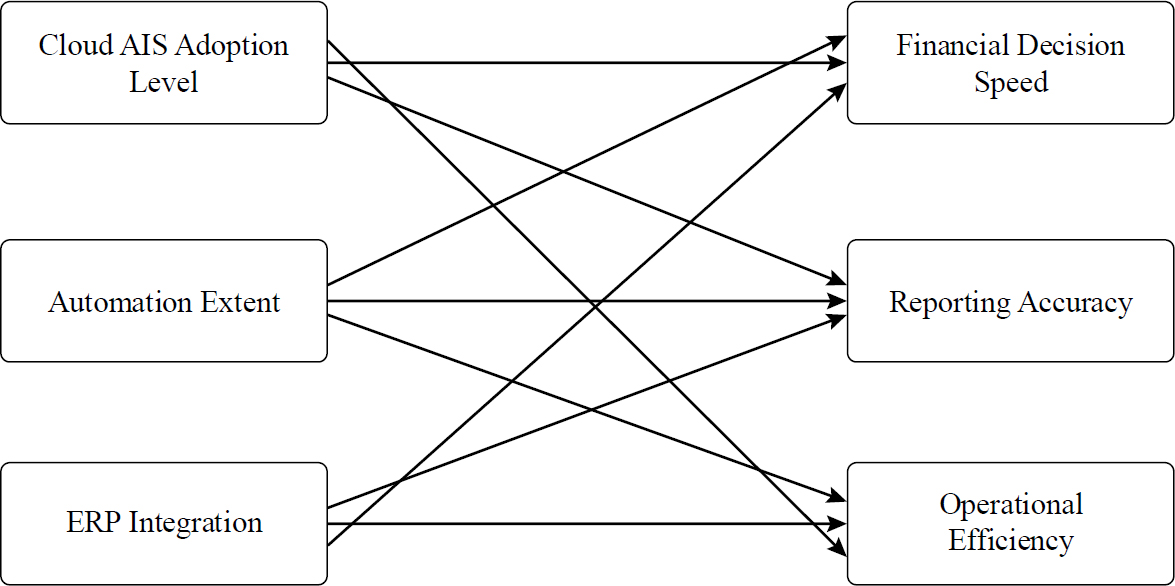
Fig. (1). Conceptual framework.
3. METHODOLOGY
In this study, a cross-sectional explanatory survey design was employed to test the hypothesised relationships among the adoption, automation, and ERP integration of CAIS and measurable performance outcomes of UAE SMEs, informed by the resource-based view, which posits that the adoption of CAIS, its automation, and integration with ERP systems are resources that lead to performance outcomes (Cho & Linderman, 2020). The information is not experimental and self-reported; therefore, it should be understood as correlational, not causal. The population consisted of UAE Small and Medium Enterprises (SMEs) that are using CAIS for accounting and financial management nowadays. To guarantee that respondents had first-hand experience with CAIS, the sampling method adopted was purposive and non-probability type, which is typical in information systems adoption research (Hojnik & Huđek, 2023). The eligible firms were those that met the official UAE SME classification and had a CAIS for at least three years, and respondents’ positions required them to examine the capabilities linked to the CAIS, which included accounting, financial reporting, or managerial decision-making roles (Putro, 2023). Firms that used only on-premises systems and respondents who did not have financial decision-making responsibilities were excluded, and screening questions at the beginning of the questionnaire verified eligibility.
Data were collected using a pre-designed online questionnaire that was circulated through SME associations, professional networks, and digital business platforms in the UAE. A total of 400 questionnaires were sent, of which 330 were completed and found to be valid after checking for completeness, consistency, and eligibility. The respondents ranged from micro to small and medium-sized firms across different sectors, such as trading, manufacturing, services, logistics, and technology, from several emirates in the UAE. The results obtained cannot be considered statistically representative of the UAE SME population because of the non-probability sampling technique employed. However, the number of respondents selected (n = 330) was larger than the minimum sample size required based on a priori power analysis using G*Power software (α = 0.05, power = 0.80, and medium effect size).
The questionnaire (Appendix A) contained closed-ended questions on a Likert 5-point scale (1 = strongly disagree to 5 = strongly agree). The measures of CAIS adoption, extent of automation, and ERP integration were adapted from previously validated measures with minor context changes for UAE SMEs, and performance outcomes were operationalised as financial decision speed, reporting accuracy, and operational efficiency; items were structured to avoid conceptual overlap between predictors and outcomes. The questionnaire was reviewed by three academic experts with experience in accounting information systems and SME digitalisation to establish face and content validity before data collection.
Potential common method bias (CMB) was minimised and addressed as part of the data collection procedures as follows: i) the responses were anonymous, ii) the wording of the items was kept simple and unambiguous, and iii) the design of the instrument minimised patterns of socially desirable answers. According to the single factor test suggested by Harman, the first factor contributed less than 50% of the variance, and the VIF values were less than 3.3, indicating that there was no significant problem with CMB (Table 1). In all procedures, ethical conduct of research was observed with anonymous, informed, and voluntary participation. The data were analysed using the partial least squares structural equation modelling (PLS-SEM) method, which is suitable for predicting data using complex research models and small to medium samples (Pereira et al., 2024). The analysis was separated into two parts: first, to test the measurement model and test for reliability and validity (Cronbach’s alpha, composite reliability, average variance extracted, and discriminant validity); second, to perform the structural path analysis, along with bootstrapping to estimate path coefficients, t-statistics, and p-values for the hypothesised relationships between CAIS adoption, automation, ERP integration, and the performance outcomes.
Table 1. Full collinearity VIF.
| – | VIF |
| Automation Extent -> Financial Decision Speed | 1.37 |
| Automation Extent -> OE | 1.37 |
| Automation Extent -> Reporting Accuracy | 1.37 |
| Cloud AIS Adoption Level -> Financial Decision Speed | 1.818 |
| Cloud AIS Adoption Level -> OE | 1.818 |
| Cloud AIS Adoption Level -> Reporting Accuracy | 1.818 |
| Integration of ERP -> Financial Decision Speed | 1.681 |
| Integration of ERP -> OE | 1.681 |
| Integration of ERP -> Reporting Accuracy | 1.681 |
4. RESULTS
The demographic traits of the respondents are presented in Table 2. The statistics indicate diversity in age, gender, education, and professional experience. The demographic profile revealed that most of the respondents were in the ages of 31-35 years (40.91%), which implies that the sample was mature enough in its professional activities to provide valid information about the use of CAIS. The majority of the respondents were male (69.70%), and many of them had graduate or postgraduate degrees (86.66%), which is a highly educated sample. Regarding experience, half of them had between 6-10 years of experience which gave them good exposure to financial and accounting practices. These factors ensured the reliability, relevance, and extent to which the data collected were broadly representative of the SMEs that had embraced CAIS; however, a purposive sampling approach prevents claims of representativeness.
Table 2. Demographic characteristics of respondents.
| Demographic Category | Groups | Frequency | Percentage |
| Age | Up to 25 | 10 | 3.03% |
| 26–30 | 80 | 24.24% | |
| 31–35 | 135 | 40.91% | |
| 36–40 | 75 | 22.73% | |
| 40+ | 30 | 9.09% | |
| Gender | Male | 230 | 69.70% |
| Female | 100 | 30.30% | |
| Education | Graduation | 156 | 47.27% |
| Post-graduation | 130 | 39.39% | |
| Diploma/Certification | 44 | 13.33% | |
| Experience | 1–5 years | 87 | 26.36% |
| 6–10 years | 165 | 50.00% | |
| 10+ years | 78 | 23.64% |
Measurement Model was evaluated to determine the reliability and validity of the constructs (Table 3). Factor loadings, Cronbach’s alpha, composite reliability, and average variance extracted (AVE) were analysed to ascertain that the construct measures were accurate. Factor loadings were all above 0.700, which indicates that individual items represented constructs very strongly. The Cronbach’s alpha values ranged from 0.900 to 0.829, indicating good internal consistency. The composite reliability was above 0.800, and the AVE was above 0.700 which proved convergent validity. These findings indicate that there was reliability and validity in the measurement model which suggests a strong background for testing the structural association among variables.
Table 3. Measurement model results.
| Construct | Indicators | Factor Loadings | Cronbach’s Alpha | Composite Reliability | Average Variance Extracted (AVE) |
| Automation Extent | AE1 | 0.842 | 0.829 | 0.838 | 0.746 |
| AE2 | 0.914 | ||||
| AE3 | 0.834 | ||||
| CAIS Adoption Level | CAAL1 | 0.878 | 0.838 | 0.843 | 0.755 |
| CAAL2 | 0.892 | ||||
| CAAL3 | 0.837 | ||||
| Financial Decision Speed | FDS1 | 0.907 | 0.900 | 0.900 | 0.834 |
| FDS2 | 0.930 | ||||
| FDS3 | 0.903 | ||||
| Integration of ERP | IERP1 | 0.893 | 0.888 | 0.889 | 0.818 |
| IERP2 | 0.928 | ||||
| IERP3 | 0.890 | ||||
| Operational Efficiency | OE1 | 0.866 | 0.857 | 0.860 | 0.778 |
| OE2 | 0.910 | ||||
| OE3 | 0.870 | ||||
| Reporting Accuracy | RA1 | 0.900 | 0.892 | 0.895 | 0.823 |
| RA2 | 0.929 | ||||
| RA3 | 0.892 |
Table 4 presents the evaluation of discriminant validity based on the Heterotrait-Monotrait (HTMT) ratio, which assesses the extent to which the constructs are empirically different. HTMT values below 0.850 indicate discriminant validity. All the HTMT values of the Automation Extent, CAIS Adoption, Financial Decision Speed, ERP Integration, Operational Efficiency, and Reporting Accuracy constructs were less than 0.850, which indicates satisfactory discriminant validity. This proves that every construct includes a distinct attribute of CAIS capabilities and performance outcomes, and that multicollinearity among the latent variables is unlikely to be an issue in the measurement model.
Table 4. Discriminant validity.
| – | AE | CAIS | FDS | IERP | OE |
| CAIS adoption level [CAIS] | 0.596 | – | – | – | – |
| Financial Decision Speed [FDS] | 0.432 | 0.621 | – | – | – |
| Integration of ERP [IERP] | 0.504 | 0.718 | 0.717 | – | – |
| Operational Efficiency [OE] | 0.398 | 0.311 | 0.507 | 0.495 | – |
| Reporting Accuracy [RA] | 0.327 | 0.259 | 0.459 | 0.481 | 0.833 |
The proposed relationships among the adoption of CAIS, automation, and ERP integration (independent variables) and financial decision speed, accuracy of reporting, and operational efficiency (dependent variables) were empirically examined using PLS-SEM (Table 5). The extent of automation had a significant positive impact on operational efficiency (β = 0.209, p < 0.01) and accuracy of reporting (β = 0.157, p < 0.05), but not on financial decision speed (β = 0.060, p = 0.317). The adoption of CAIS positively impacted financial decision speed (β = 0.211, p < 0.01) but had no significant influence on operational efficiency (β = -0.084, p = 0.278) or reporting accuracy (β = -0.124, p = 0.140). ERP integration significantly and positively influenced all three performance indicators: financial decision speed (β = 0.485, p < 0.01), operational efficiency (β = 0.395, p < 0.01), and reporting accuracy (β = 0.440, p < 0.01).
Table 5. Structural model results.
| – | Path Coefficient | T statistics | P values | CI (2.5%) | CI (97.5%) |
| Automation Extent -> Financial Decision Speed | 0.060 | 1.002 | 0.317 | -0.050 | 0.185 |
| Automation Extent -> Operational efficiency | 0.209*** | 2.967 | 0.003 | 0.077 | 0.348 |
| Automation Extent -> Reporting Accuracy | 0.157** | 2.054 | 0.040 | 0.013 | 0.315 |
| CAIS adoption level -> Financial Decision Speed | 0.211*** | 3.039 | 0.002 | 0.074 | 0.343 |
| CAIS adoption level -> Operational efficiency | -0.084 | 1.085 | 0.278 | -0.232 | 0.070 |
| CAIS adoption level -> Reporting Accuracy | -0.124 | 1.477 | 0.140 | -0.286 | 0.042 |
| Integration of ERP -> Financial Decision Speed | 0.485*** | 7.560 | 0.000 | 0.357 | 0.611 |
| Integration of ERP -> Operational efficiency | 0.395*** | 5.465 | 0.000 | 0.243 | 0.526 |
| Integration of ERP -> Reporting Accuracy | 0.440*** | 5.946 | 0.000 | 0.290 | 0.577 |
| Bootstrapping | 5,000 sub-samples | – | – | – | – |
| SRMR | 0.049 | – | – | – | – |
Note: *** indicates significance at 1%, ** indicates significance at 5%
The explanatory power of the model is presented in Table 6. The model accounted for 44.8%, 21.9 %, and 20.6% of the financial decision speed variance, operational efficiency variance, and 20.6% of the variance in reporting accuracy variance, respectively.
Table 6. Model summary.
| Dependent Variable | R² | Adjusted R² |
| Financial Decision Speed | 0.448 | 0.443 |
| Operational Efficiency | 0.219 | 0.212 |
| Reporting Accuracy | 0.206 | 0.199 |
The f-square results show the relative sizes of the predictors on the dependent variables (Table 7). ERP integration had the most significant effect. The effect on financial decision speed (f² = 0.253) is large, while the effects on reporting accuracy (f² = 0.145) and operational efficiency (f² = 0.119) are small-to-medium, collectively pointing to the critical importance of ERP integration as a predictor. CAIS adoption showed small effect sizes despite its statistical significance. The extent of automation has insignificant to weak impacts, especially on the speed of financial decisions (0.005). In general, ERP integration has the strongest impact, and automation and CAIS have a minor effect on enhancing organisational and performance outcomes.
Table 7. Effect size (f2).
| – | f2 |
| Automation Extent -> Financial Decision Speed | 0.005 |
| Automation Extent -> OE | 0.041 |
| Automation Extent -> Reporting Accuracy | 0.023 |
| CAIS adoption level -> Financial Decision Speed | 0.044 |
| CAIS adoption level -> OE | 0.005 |
| CAIS adoption level -> Reporting Accuracy | 0.011 |
| Integration of ERP -> Financial Decision Speed | 0.253 |
| Integration of ERP -> OE | 0.119 |
| Integration of ERP -> Reporting Accuracy | 0.145 |
The Q2 prediction values showed a high predictive relevance of the model (Table 8). The speed of financial decision-making (0.428) has high predictive relevance, whereas operational efficiency (0.193) and reporting accuracy (0.176) have moderate predictive relevance. Overall, the model has a satisfactory to moderate predictive value for the three outcomes, especially the speed of financial decision, which could facilitate its use in practice.
Table 8. Predictive relevance (Q2).
| – | Q² predict |
| Financial Decision Speed | 0.428 |
| Operational Efficiency | 0.193 |
| Reporting Accuracy | 0.176 |
The results of the hypotheses are shown in Table 9. 9 hypotheses were tested, of which 6 were supported and 3 were not.
Table 9. Hypotheses assessment summary.
| Hypothesis | Result |
| H1: Cloud (CAIS) adoption has a significant and positive impact on financial decision speed | Accepted |
| H2: Cloud (CAIS) adoption has a significant and positive impact on reporting accuracy | Rejected |
| H3: Cloud (CAIS) adoption has a significant and positive impact on operational efficiency | Rejected |
| H4: Automation extent has a significant and positive impact on financial decision speed | Rejected |
| H5: Automation extent has a significant and positive impact on reporting accuracy | Accepted |
| H6: Automation extent has a significant and positive impact on operational efficiency | Accepted |
| H7: ERP integration has a significant and positive impact on financial decision speed | Accepted |
| H8: ERP integration has a significant and positive impact on reporting accuracy | Accepted |
| H9: ERP integration has a significant and positive impact on operational efficiency | Accepted |
5. DISCUSSION
The results suggest that the capabilities of CAIS do not necessarily lead to uniform outcomes; rather, effectiveness varies depending on the extent and depth of integration of CAIS capabilities into organisational procedures. This is in line with dynamic capability theory (Bleady et al., 2018), which holds that performance benefits from CAIS resources occur when the resources are adapted, integrated, and reconfigured within the firm, and not just acquired.
As in H1, the financial decision speed significantly increased with CAIS adoption, confirming previous findings that cloud systems accelerate managerial response time by allowing access to financial data in real time and eliminating the need for manual financial consolidation (Rahman & Hossain, 2024; Hojnik & Huđek, 2023). This advantage of adoption may be particularly significant in the UAE, as the regulatory intensity and compliance requirements are substantial. No significant differences were found in H2 (improved reporting accuracy) or H3 (operational efficiency), indicating that the main value of adoption lies in access to information, not the change in underlying processes. Integrated systems, employee training, and automated controls do not seem to be mutually exclusive and are likely required to achieve true accuracy and efficiency (Ayoub & Sopuru, 2026). When adopted superficially, with manual controls or parallel record-keeping, they may not result in accuracy or efficiency improvements (Putro, 2023). This aligns with the perspective that technology adoption alone is insufficient to achieve better reporting or operational outcomes (Sihotang et al., 2024).
The situation was different for automation: it had a significant positive impact on the accuracy of reporting and efficiency of operations (H5 and H6 supported) but not on the speed of financial decisions (H4 not supported). This aligns with the findings that automation enhances reporting accuracy by standardising processes and minimising human error (Kimani, 2024) and increases operational efficiency by reducing repetitive tasks and allowing resources to be allocated for more valuable activities (Ojika et al., 2022). It also shows that despite its limited effect on decision speed, automated outputs are still dependent on interpreting and analysing information, which automation does not supply, but instead may increase the reliability of the information (Al-Dmour, 2018; John, 2024).
The most widespread impact was in the area of ERP integration, which had a strong impact on all three performance outcomes (H7–H9 supported), reflecting evidence of ERP’s ability to synchronise financial and operational data across departments while also eliminating data fragmentation (Barna et al., 2021; Faccia & Petratos, 2021). However, ERP integration combines the features of adoption and automation, and it seems to yield greater performance benefits overall than the adoption or automation features alone. This impact can be further amplified in the UAE through regulatory compliance pressure and digital transformation initiatives by the government, which are pushing for integration over independent systems (Hadouga, 2023) that can enhance cross-functional visibility and minimise process duplication.
Overall, these findings confirm that performance gains are more likely to be realised through the process of transforming and combining technological resources into a new configuration rather than simply owning them (Ginting et al., 2025), and reinforce the findings that depth and integration are more important than adoption or non-adoption of technology to realise performance gains (Alao et al., 2024).
The results have several implications for the practice of SME managers and policymakers but need to be viewed with caution because the data are cross-sectional and self-reported. To maximise the value of these findings for SME managers, investments in managerial digital skills may be warranted to enable them to understand ERP outputs that can then be used to guide timely decision-making (Nofel et al., 2024; Rakibuzzaman et al., 2025). Policy measures can facilitate this transition by implementing targeted training initiatives and incentives for digital infrastructure, such as supporting ERP integration and promoting more extensive use of CAIS in line with the UAE’s overall digital transformation and economic diversification goals.
CONCLUSION
This study investigated the relationship between three capabilities within CAIS (adoption, automation, and ERP integration) and the speed of financial decisions, reporting accuracy, and operational efficiency among UAE SMEs based on the resource-based view and dynamic capability theory. The survey data of 330 SME owners, finance managers, and accounting professionals were analysed using the PLS-SEM method. The findings indicate that the adoption of CAIS has a significant impact on the speed of financial decision-making but not on reporting accuracy or operational efficiency, while the automation of the financial decision-making process has a significant impact on reporting accuracy and operational efficiency but not on the speed of financial decision-making. ERP integration was the most successful overall predictor, with a significant impact on all three outcomes. Overall, these findings suggest that the initial step in cloud adoption is not sufficient to deliver wide-ranging performance improvements and that the greatest performance gains occur when cloud adoption is complemented by automation and, especially, ERP integration into a full-fledged digital accounting ecosystem.
THEORETICAL IMPLICATIONS
The results build on the resource-based view and dynamic capability theory, showing that the adoption of CAIS, automation, and ERP integration are not a single digital accounting capability but theoretically and empirically different organisational capabilities. The differentiated pattern of results confirms that having a capability, and thereby possessing a resource, is not necessarily a source of performance gains, whereas dynamic capability theory is better able to explain why automation and, particularly, ERP integration (which requires active reconfiguration and cross-functional integration of the resources) have broader and stronger performance effects. This distinction further develops the two theories by explaining that the results of using digital resources to translate into performance outcomes would vary depending on the capability and how deeply it is in the organisational routines.
PRACTICAL IMPLICATIONS
Overall, the results indicate that increased automation and ERP integration are linked to wider performance benefits for SME managers in the UAE; however, the benefits must be balanced against implementation costs and organisational preparedness. The findings indicate that policy efforts to support digitalisation for SMEs may be more fruitful if they include support for automation, system integration, and cloud adoption. Government agencies supporting SME digitalisation should prioritise ERP integration initiatives rather than focusing exclusively on cloud computing adoption.
LIMITATIONS OF THE STUDY AND FUTURE RESEARCH
This study has some limitations that require further research. Because of the cross-sectional, self-reported design, the results of this study may not be considered causal, and potential response bias is also present; future research should use a longitudinal design or objective measures of system usage and financial performance to mitigate this. The results may be limited by the fact that the sample was limited to UAE SMEs identified via purposive sampling. Comparative studies across regions and studies that included moderating variables such as digital literacy, organisational culture, or top management support could enhance the generalisability and explanatory power of the results. Case studies or interviews could help better explain the qualitative aspects of the quantitative patterns found here, as well as the implementation difficulties and best practices.
LIST OF ABBREVIATIONS
AVE | = | Average Variance Extracted |
CMB | = | Common Method Bias |
CAIS | = | Cloud Accounting Information Systems |
DCT | = | Dynamic Capability Theory |
ERP | = | Enterprise Resource Planning |
RBV | = | Resource-Based View |
SMEs | = | Small and Medium Enterprises |
AUTHOR’S CONTRIBUTION
M.F. has contributed to the study conceptualization, methodology, data analysis, interpretation of results, and manuscript writing.
ETHICAL STATEMENT & INFORMED CONSENT
The study was conducted in accordance with applicable ethical principles and institutional research standards. Where human participants were involved, participation was voluntary, informed consent was obtained prior to participation, and confidentiality and anonymity were maintained throughout the research process. All data were collected, stored, analysed, and reported responsibly, with appropriate measures taken to protect participants’ privacy and welfare. Where applicable, ethical approval was obtained from the relevant institutional ethics committee before commencement of the study.
AVAILABILITY OF DATA AND MATERIALS
The data will be made available on reasonable request by contacting the corresponding author [M.F.].
FUNDING
None.
CONFLICT OF INTEREST
The author declares that there are no known financial, professional, or personal conflicts of interest that could have influenced the research, interpretation of the findings, or preparation of the manuscript.
ACKNOWLEDGEMENTS
Declared none.
DECLARATION OF AI
The author confirms that the research was conducted responsibly and in accordance with relevant academic and ethical standards. The author takes responsibility for the integrity and accuracy of the work and confirm that all relevant ethical, authorship, funding, and conflict-of-interest requirements have been appropriately addressed. During the preparation of this manuscript, the author used ChatGPT for language editing and refinement purposes. Following the use of this tool, the author carefully reviewed and revised the content where necessary and accept full responsibility for the final published version of the article.
APPENDIX A QUESTIONNAIRE
Section A: Respondent Information
- Age:
- Up to 25
- 26–30
- 31–35
- 36–40
- 40+
- Gender:
- Male
- Female
- Education Level:
- Graduation
- Post-graduation
- Diploma/Certification
- Years of Experience in Accounting/Finance/Management:
- 1–5 Years
- 6–10 Years
- 10+ Years
Section B
| Variable / Construct | Questionnaire | Strongly Disagree | Disagree | Neutral | Agree | Strongly Agree |
| Cloud (CAIS) Adoption | Our SME uses (CAIS) frequently for recording and processing daily financial transactions. | ☐ | ☐ | ☐ | ☐ | ☐ |
| Cloud (CAIS) is used as the primary system for preparing financial statements (rather than manual or hybrid systems). | ☐ | ☐ | ☐ | ☐ | ☐ | |
| Users regularly rely on (CAIS) dashboards/interfaces to retrieve financial information. | ☐ | ☐ | ☐ | ☐ | ☐ | |
| Automation Extent | Routine accounting tasks (e.g., data entry, posting, reconciliation) are automatically executed by the system. | ☐ | ☐ | ☐ | ☐ | ☐ |
| The system automatically generates financial reports without manual compilation. | ☐ | ☐ | ☐ | ☐ | ☐ | |
| Minimal human intervention is required in standard accounting processes due to automation. | ☐ | ☐ | ☐ | ☐ | ☐ | |
| ERP Integration | ERP system is technically integrated with other systems (e.g., inventory, sales, HR) through shared databases or interfaces. | ☐ | ☐ | ☐ | ☐ | ☐ |
| Data entered in one system (e.g., sales/inventory) is automatically reflected in the accounting system. | ☐ | ☐ | ☐ | ☐ | ☐ | |
| Different functional systems in the organisation operate on a unified platform with seamless data flow. | ☐ | ☐ | ☐ | ☐ | ☐ | |
| Financial Decision Speed | Managers can quickly interpret financial information provided by the system for decision-making. | ☐ | ☐ | ☐ | ☐ | ☐ |
| Financial insights enable timely responses to business changes. | ☐ | ☐ | ☐ | ☐ | ☐ | |
| Decision-making delays due to lack of financial information are minimal in our SME. | ☐ | ☐ | ☐ | ☐ | ☐ | |
| Reporting Accuracy | Financial reports generated by the system are free from material errors. | ☐ | ☐ | ☐ | ☐ | ☐ |
| The system ensures consistency of financial data across different reports. | ☐ | ☐ | ☐ | ☐ | ☐ | |
| Adjustments and corrections in financial reports are rarely required. | ☐ | ☐ | ☐ | ☐ | ☐ | |
| Operational Efficiency | Accounting processes are completed with optimal use of time and resources. | ☐ | ☐ | ☐ | ☐ | ☐ |
| There is minimal duplication of work in financial and accounting activities. | ☐ | ☐ | ☐ | ☐ | ☐ | |
| Workflows across departments are streamlined and well-coordinated. | ☐ | ☐ | ☐ | ☐ | ☐ |
REFERENCES
Akpe, O. E. E., Mgbame, A. C., Ogbuefi, E., Abayomi, A. A., & Adeyelu, O. O. (2022). The role of adaptive BI in enhancing SME agility during economic disruptions. International Journal of Management and Organizational Research, 1(1), 183–198.
https://doi.org/10.54660/IJMOR.2022.1.1.183-198
Alao, O. B., Dudu, O. F., Alonge, E. O., & Eze, C. E. (2024). Automation in financial reporting: A conceptual framework for efficiency and accuracy in US corporations. Global Journal of Advanced Research and Reviews, 2(2), 40–50.
https://doi.org/10.58175/gjarr.2024.2.2.0057
Al-Assaf, K., Alzahmi, W., Alshaikh, R., Bahroun, Z., & Ahmed, V. (2024). The relative importance of key factors for integrating enterprise resource planning (ERP) systems and performance management practices in the UAE healthcare sector. Big Data and Cognitive Computing, 8(9), 122.
https://doi.org/10.3390/bdcc8090122
Al-Dmour, A. (2018). The impact of the reliability of the accounting information system upon the business performance via the mediating role of the quality of financial reporting. The International Journal of Accounting and Business Society, 26(1), 78–111.
https://doi.org/10.21776/ub.ijabs.2018.26.1.5
Alshirah, M. H., Lutfi, A., Alshirah, A. F., Saad, M., Ibrahim, N. M. E. S., & Mohammed, F. (2021). Influences of environmental factors on the intention to adopt cloud-based accounting information system among SMEs in Jordan. Accounting, 7, 645–654.
https://doi.org/10.5267/j.ac.2020.12.013
Ashrafuzzaman, M. (2024). The impact of cloud-based management information systems on HRM efficiency: An analysis of small and medium-sized Enterprises. Academic Journal on Artificial Intelligence, Machine Learning, Data Science and Management Information Systems, 1(1), 40–56.
https://doi.org/10.69593/ajaimldsmis.v1i01.124
Atieh, A. A., Hussein, A. A., Al-Jaghoub, S., Alheet, A. F., & Attiany, M. (2025). The impact of digital technology, automation, and data integration on supply chain performance: Exploring the moderating role of digital transformation. Logistics, 9(1), 11.
https://doi.org/10.3390/logistics9010011
Ayoub, H. S., & Sopuru, J. C. (2026). Reconfiguring strategic capabilities in the digital era: How AI-enabled dynamic capability, data-driven culture, and organizational learning shape firm performance. Sustainability, 18(3), 1157.
https://doi.org/10.3390/su18031157
Barna, L. E. L., Ionescu, B. Ș., & Ionescu-Feleăgă, L. (2021). The relationship between the implementation of ERP systems and the financial and non-financial reporting of organizations. Sustainability, 13(21), 11566.
https://doi.org/10.3390/su132111566
Barney, J. (1991). Firm resources and sustained competitive advantage. Journal of Management, 17(1), 99–120.
https://doi.org/10.1177/014920639101700108
Belas, J., Seow, R. Y. C., Dorusincova, A., Rech, F., & Khan, K. A. (2026). How do SMEs’ attitudes toward stakeholders shape their sustainability assessment? An empirical study from the V4 countries. Amfiteatru Economic, 28(72), 774-788.
https://doi.org/10.24818/ea/2026/72/774
Bleady, A., Ali, A. H., & Ibrahim, S. B. (2018). Dynamic capabilities theory: Pinning down a shifting concept. Academy of Accounting & Financial Studies Journal, 22(2). Available from: https://www.abacademies.org/articles/dynamic-capabilities-theory-pinning-down-a-shifting-concept-7230.html
Canon, J. G. F., dos Santos, R. J. R., de Carvalho, V. D. H., Monte, M. B. D. S., & de Barros, T. L. (2025). Integrated logistics management through ERP system: A case study in an emerging regional market. Logistics, 9(2), 59.
https://doi.org/10.3390/logistics9020059
Cho, Y. S., & Linderman, K. (2020). Resource-based product and process innovation model: Theory development and empirical validation. Sustainability, 12(3), 913.
https://doi.org/10.3390/su12030913
Faccia, A., & Petratos, P. (2021). Blockchain, Enterprise Resource Planning (ERP) and accounting information systems (AIS): Research on e-procurement and system integration. Applied Sciences, 11(15), 6792.
https://doi.org/10.3390/app11156792
Ginting, H., Utami, H. N., Riyadi, R., & Hutahayan, B. (2025). Exploring the impact of servitization and digitalization on firm competitiveness and performance: The moderating role of government support. Sustainability, 17(19), 8756.
https://doi.org/10.3390/su17198756
Hadouga, H. (2023). The impact of small and medium industries on economic growth of the United Arab Emirates. Time Description of Economic Reforms, 4, 26–33.
https://doi.org/10.32620/cher.2023.4.04
Heikinheimo, M., Hautamäki, P., Julkunen, S., & Koponen, J. (2025). Dynamic capabilities and multi-sided platforms: Fostering organizational agility, flexibility, and resilience in B2B service ecosystems. Industrial Marketing Management, 125, 179–194.
https://doi.org/10.1016/j.indmarman.2025.01.006
Hermansyah, Y. (2023). Assessing the impact of communicative artificial intelligence-based accounting information systems on Small and Medium Enterprises. Journal of Wireless Mobile Networks, Ubiquitous Computing, and Dependable Applications, 14(3), 230–239.
https://doi.org/10.58346/JOWUA.2023.I3.017
Hojnik, B. B., & Huđek, I. (2023). Small and medium-sized enterprises in the digital age: Understanding characteristics and essential demands. Information, 14(11), 606.
https://doi.org/10.3390/info14110606
Salman, H. A. J. D., Mansor, N. B., & Alshami, S. A. (2025). Digital transformation and competitiveness of SMEs in the UAE: A review paper on challenges and strategic responses. International Journal of Academic Research in Economics and Management Sciences, 14(3).
https://doi.org/10.6007/ijarems/v14-i3/26402
John, B. I. (2024). Strategic oversight of AI-enabled manufacturing transformation advancing process automation, quality assurance, system reliability, and enterprise-wide operational performance excellence. International Journal of Research Publication and Reviews, 5(12), 6182-6194.
https://doi.org/10.55248/gengpi.06.1125.3868
Johnson, N. (2025). UAE welcomes SMEs. Accounting and Business. Available from: https://abmagazine.accaglobal.com/global/articles/2025/jul/practice/uae-welcomes-smes.html
Kimani, B. (2024). Influence of accounting information systems (AIS) on financial reporting accuracy. American Journal of Accounting, 6(1), 37–47.
https://doi.org/10.47672/ajacc.1787
Lutfi, A. (2022). Understanding the intention to adopt cloud-based accounting information system in Jordanian SMEs. International Journal of Digital Accounting Research, 22, 47-70.
https://doi.org/10.4192/1577-8517-v22_2
Mhaskey, S. V. (2024). Integration of artificial intelligence (AI) in enterprise resource planning (ERP) systems: Opportunities, challenges, and implications. International Journal of Computer Engineering in Research Trends, 11(12), 1–9.
https://doi.org/10.22362/ijcert/2024/v11/i12/v11i1201
Mujalli, A., Wani, M. J. G., Almgrashi, A., Khormi, T., & Qahtani, M. (2024). Investigating the factors affecting the adoption of cloud accounting in Saudi Arabia’s small and medium-sized enterprises (SMEs). Journal of Open Innovation: Technology, Market, and Complexity, 10(2), 100314.
https://doi.org/10.1016/j.joitmc.2024.100314
Nofel, M., Marzouk, M., Elbardan, H., Saleh, R., & Mogahed, A. (2024). From sensors to standardized financial reports: A proposed automated accounting system integrating IoT, Blockchain, and XBRL. Journal of Risk and Financial Management, 17(10), 445.
https://doi.org/10.3390/jrfm17100445
Ojika, F. U., Owobu, W. O., Abieba, O. A., Esan, O. J., Ubamadu, B. C., & Daraojimba, A. I. (2022). The role of artificial intelligence in business process automation. A model for reducing operational costs and enhancing efficiency. International Journal of Advanced Multidisciplinary Research and Studies, 4(6), 1449-1462.
https://doi.org/10.62225/2583049X.2024.4.6.4046
Owusu, J., Boateng, P. A., & Yeboah, N. (2024). Strategic decision support systems for enhancing competitive advantage in small and medium enterprises. In Proceedings of the IEEE Smart Block Africa Conference, 1–10.
https://doi.org/10.1109/SmartBlock4Africa61928.2024.10779545
Pereira, L. M., Rodrigues, V. S., & Freires, F. G. M. (2024). Use of Partial Least Squares Structural Equation Modeling (PLS-SEM) to Improve Plastic Waste Management. Applied Sciences, 14(2), 628.
https://doi.org/10.3390/app14020628
Putro, H. P. (2023). The impact of information technology implementation in accounting on the effectiveness of management decision making: A qualitative study. Atestasi: Jurnal Ilmiah Akuntansi, 6(1), 523–539.
https://doi.org/10.57178/atestasi.v6i1.969
Rahman, S., & Hossain, M. Z. (2024). Cloud-Based Management Information Systems Opportunities and Challenges for Small and Medium Enterprises (SMEs). Pacific Journal of Business Innovation and Strategy, 1(1), 28–37.
https://doi.org/10.70818/pjbis.2024.v01i01.014
Rakibuzzaman, M., Akash, T. R., Reza, J., & Alam, M. A. (2025). Automated financial reporting and Enhancement of Efficiency of Accounts. Journal of Economics, Finance and Accounting Studies, 7(1), 80–92.
https://doi.org/10.32996/jefas.2025.7.1.7
Ren, S. (2022). Optimization of enterprise financial management and decision-making systems based on big data. Journal of Mathematics, 1708506.
https://doi.org/10.1155/2022/1708506
Sihotang, H. T., Vinsensia, D., Riandari, F., & Chandra, S. (2024). Data-driven corporate growth: A dynamic financial modelling framework for strategic agility. International Journal of Basic and Applied Science, 13(2), 84–95.
https://doi.org/10.35335/ijobas.v13i2.485
Sola, S. R. (2024). The future of ERP cloud functional processes: AI-Driven automation and OIC integration. International Journal of Leading Research Publication, 5(7).
https://doi.org/10.5281/zenodo.15259105
Teece, D. J., Pisano, G., & Shuen, A. (1997). Dynamic capabilities and strategic management. Strategic Management Journal, 18(7), 509–533.
https://doi.org/10.1002/(SICI)1097-0266(199708)18:7%3C509::AID-SMJ882%3E3.0.CO;2-Z
Tuli, F. A., & Kaluvakuri, S. (2022). Implementation of ERP Systems in Organizational Settings: Enhancing Operational Efficiency and Productivity. Asian Business Review, 12(3), 89–96.
https://doi.org/10.18034/abr.v12i3.676
UAE Government. (2025). The UAE Digital Government Strategy 2025 – The Official Portal of the UAE Government. UAE Beta. Available from: https://u.ae/en/about-the-uae/strategies-initiatives-and-awards/strategies-plans-and-visions/government-services-and-digital-transformation/uae-national-digital-government-strategy
Yue, S., Ye, G., Khalid, F., & Wang, T. (2025). From digital transformation to energy efficiency: Ownership concentration’s hidden role in driving climate solutions. Humanities and Social Sciences Communications, 12, 1615.
https://doi.org/10.1057/s41599-025-05911-8