

- ABSTRACT
- 1. INTRODUCTION
- 2. LITERATURE REVIEW
- 3. METHODOLOGY
- 4. RESULTS
- 5. Discussion
- CONCLUSION
- LIMITATIONS AND FUTURE RECOMMENDATIONS
- POLICY IMPLICATIONS
- LIST OF ABBREVIATIONS
- AUTHOR'S CONTRIBUTION
- ETHICAL STATEMENT & INFORMED CONSENT
- AVAILABILITY OF DATA AND MATERIALS
- FUNDING
- CONFLICT OF INTEREST
- ACKNOWLEDGEMENTS
- DECLARATION OF AI
- REFERENCES
Relationship between Social Media Advertising and Consumer Purchase Intentions in the Saudi Arabian E-Commerce Sector: The Moderating Role of Consumer Trust
 DOI:
DOI:
⬇ Downloads: 15
1Department of Marketing, Imam Abdulrahman Bin Faisal University, Dammam, Saudi Arabia
Received: 12 February, 2026
Accepted: 22 July, 2026
Revised: 18 July, 2026
Published: 23 September, 2026
ABSTRACT
Introduction: The current study was aimed to examine the relationship between Social Media Advertising (SMA) and Consumer Purchase Intentions (CPI) through direct relationships and examine how consumer trust in brands moderates the relationship amid SMA and CPI.
Methodology: This study followed a quantitative research design in which data was collected through by applying a primary method in which structured close-ended survey questionnaire was used and items were measured on 5-point Likert scale. The sample size of the study was 380 respondents, who were primarily consumers in the e-commerce industry. Data analysis was performed using Pearson’s correlation and Preacher and Hayes process model.
Results: The findings demonstrated that SMA was positively and significantly related to CPI (β = 0.620, p < 0.001), implying that the greater the advertising performed through social media platforms, the greater the intention of consumers to purchase in the setting of e-commerce in Saudi Arabia. In addition, the interaction between SMA and consumer trust (SMA x CT) was statistically significant (β = 0.135, p = 0.030) which shows that consumer trust moderates the association between SMA and CPI.
Conclusion: These results revealed that social media advertising has a high level of relationship with consumer’s intentions to purchase, within the Saudi e-commerce sector, and this is strengthened when consumer trust is high. Therefore, the process of advertising must be supplemented with clear trust-building solutions to maximise the outcome of campaigns run on social media and maintain a competitive position.
Keywords: Social media advertising, purchase intention, consumer trust, e-commerce, Saudi Arabia, moderating role.
1. INTRODUCTION
In last few years, Saudi Arabia has experienced a dramatic digital retail transformation due to high Internet penetration, mobile adoption, and changing consumer behaviour (Ezmigna et al., 2024). With the amalgamation of e-commerce in the retail industry of the Kingdom, it is important to unravel the forces behind Consumer Purchase Intention (CPI) to further this trend. Regardless of this growth, the e-commerce sector in the country still faces a number of long-standing challenges that affect the transformation of online potential customers into real purchases. A significant challenge is associated with a lack of logistical and delivery efficiency, as reflected by (Alotaibi & Aljaafari, 2024; Al-Mushayt et al., 2022) also. (Alkhalil et al., 2024) also reported that, owing to the large geography and spread of the population in the Kingdom, last-mile delivery is still very expensive, lengthy, and inconsistent, particularly in isolated areas.
Such inefficiencies often lead to delayed delivery or increased delivery costs, which adversely affect consumer satisfaction and reduce the intention to repurchase, as reported by (Olaopa & Alsuhaibany, 2023). Another important issue is the security of payment and privacy of data. According to (Edrees, 2025), cash-on-delivery remains popular among many consumers because of their untrusting attitude toward online payment gateways and concerns about cyber fraud, which is a general issue of the credibility of digital payments. By the end of 2024, the registered count of e-commerce businesses in the Kingdom exceeded 40,000, which is already a 10% annual growth (Arab News, 2025), the potential of the sector remains restricted by operational barriers and a lack of consumer trust.
Social Media Advertising (SMA) has become a more useful tool in this context to boost Consumer Intentions to make Purchases (CPI), as revealed by (Alanmi & Alharthi, 2023; and Alghamdi & Nor, 2023). In Saudi Arabia, social platforms have had a profound impact, with several consumers stating that they use social media to discover brands and more than 80% saying that their purchase choices and intentions are connected with social media advertising (PwC, 2025). From this viewpoint, (Aldayri & Hadwan, 2023; Alharthey, 2024) recommend that compelling social media ads can promote a decrease in uncertainty through the presentation of genuine product demonstrations, client feedback, and unambiguous communications. These are factors that exacerbate problems with product quality, reliability of delivery and security and can increase customers’ confidence, as mentioned by (Alqahtani & Alqahtani, 2022; Hamida, 2024). However, the effectiveness of such social media advertising to influence actual purchase intention depends on trust of consumers. Even an appealing ad can fail to make a sale when customers do not trust the logistics, payment methods or online retailers. Hence, consumer trust emerges as a factor which enhances or weakens the link between the social media ads and consumers’ purchasing intentions.
Besides a gradually increasing push in the regulatory aspect within Vision 2030, Saudi consumers exhibit strong social media engagement and high smartphone penetration, as well as a digitally progressive and culturally unique e-commerce environment, according to perspective of Eye of (Riydah, 2025) as well. (Ghada, 2025) suggests that the Saudi consumers are better protected from institutions, have improved payment methods, and are more likely to be standardised with platforms than some emerging markets, which may impact how consumers react to social media advertising. The social influence and brand reputation and credibility are other salient points affecting online purchasing in the Kingdom. Therefore, consumer trust is an important contextual factor to consider in terms of consumer transformation and conversion towards purchasing in the rapidly expanding e-transaction market in KSA.
Various research works from abroad have studied the relationship between Social Media Advertising (SMA) and the consumer intention to purchase (CPI), and the moderating role of trust between these variables; however, no studies have been carried out to examine the interaction between these three variables in the e-commerce sector of Saudi Arabia. Previous research, including (Manzoor et al., 2020; and Rehman et al., 2019), also revealed a predictive relationship amid SMA, consumer trust, and CPI; however, there are some gaps that need to be addressed. Consumer trust is not a variable that has received much attention yet; it can be a trust has not been widely studied as moderating variable that affects effectiveness of social media advertising in e-commerce. Second, while the Kingdom’s unique digital trust landscape, with its robust regulation, secure digital payment infrastructure, and growing consumer trust in digital transactions, leaves ample evidence of people’s digital trust, the Kingdom still has relatively limited evidence to draw from. Third, as a result of the constant digital commerce transformation associated with Saudi Vision 2030, more consumers have grown eager of adopting e-commerce and engaging in social media use, thereby creating a unique market environment that could differ from the environments of the past studies.
To fill these gaps, the current research investigated this association between the use of SMA and CPI and investigates the moderating role of consumer trust in the Saudi e-commerce industry. The Kingdom faces a distinct scenario due to the high penetration of social media, the variability of digital payment uptake and logistical difficulties which can impact on advert campaigns and influence consumer behaviour. This study adds an empirical and contextual perspective to the literature, since it is limited to social media advertising and consumer purchasing intentions in a rapidly-growing e-commerce Saudi Arabia environment. All of this is important because, in the Saudi market, consumers are growing more digital and more reliant on social media channels to inform them of products and where to buy them, and more willing to make online purchases. In this context, the role of social media advertising as a moderator between trust and purchase intention offers a suitable explanation for the variation in purchase intention. This study extends existing evidence by validating the relationship between social media advertising and consumer purchase intention in the context of Saudi e-commerce and examining consumer trust as a boundary condition affecting this relationship. The results offer valuable insights for any e-commerce business looking to maximise its advertising efforts and retain the trust of a highly competitive and dynamic digital market in the region.
2. LITERATURE REVIEW
2.1. Theoretical Framework
The empirical marketing model provides the foundation of this study, which considers the association of SMA and CPI across the Saudi retail e-commerce industry and applies the Theory of Planned Behaviour (TPB) as a theoretical framework of the current research. The TPB is a conceptual framework that can offer a solid conceptual familiarity with the way behavioural intentions grow out of information-related evaluations, social influence, or perceived ability to act of individuals, as recommended by (KV et al., 2021; Al Halbusi et al., 2023; and Rusidah, S. & Hairudinor., 2023). Instead of serving as a rigorously tested explanatory framework, the TPB is used to place the SMA. The present research examines the predictive association amid SMA and CPI in the e-commerce context of Saudi Arabia. Regarding consumer intentions in the digital commerce domain, the TPB is uncovered in numerous previous researches on digital commerce, even in those where the constructs of this theory were not explicitly included in the empirical model (Azad et al., 2023). As in the larger body of work, TPB only appears in the theoretical background of TPB-related studies on behavioural intention. The empirical model of this study only considers the association amongst SMA, consumer trust, and CPI.
This study builds on (Khaleeli’s, 2020) research on the association amongst SMA and CPI by empirically validating the relationship in the fast-changing e-commerce landscape of Saudi Arabia. Previous research, such as (Ingriana, 2025), has explored the same kind of relationship in various national and sectoral settings, but little evidence exists from the Saudi retail e-commerce market, which is defined by high levels of digital adoption, growth of online retail, and high engagement with social media. Furthermore, consumer trust was explored as a boundary condition that can affect this association between the constructs. The proposed empirical model incorporates these components, providing context-specific insights and cultivating the comprehension of consumer behaviour and effectiveness of digital marketing in the case of contemporary e-commerce of Saudi Arabia.
The impact of SMA varies among consumers, and trust of consumers is the theoretical foundation for this. A higher level of trust in e-commerce platforms is linked to positive attitudes towards advertising claims, less handling of promotional messages, and less online buying uncertainty. In this context, the impact of persuasive social media advertising is likely to be more easily converted to buying intent. Under these circumstances, familiarity with convincing social media advertising is anticipated to translate more readily into purchase intention. In contrast, customers with lower levels of trust are more likely to question the trustworthiness of advertising content, assess advertising claims more vigilantly, and remain cynical towards online transactions. Thus, there is a theoretical basis for studying consumer trust as a moderator amongst SMA and CPI, as the same advertising messages can elicit different behavioural responses from consumers with varying levels of trust.
2.2. Hypotheses Development
The available literature identifies Social Media Advertising (SMA) as an organised persuasive tool that conceptually conforms to the Theory of Planned Behaviour (TPB) through well-stipulated psychological pathways but not arbitrary associations. TBP also tends to conceptualise purchase intention as associated with evaluative and social factors, which gives an overall background to the marketing-intention association, as indicated by the study of (Akayleh, 2021; Ingriana, 2025) also. In this context, SMA has been identified in previous digital research to have augmented CPI because of its interactivity, informational, and emotional content. Based on this literature, the current research proposes an empirical investigation of the association between SMA and CPI without testing the underlying behavioural belief structures. (Yeo et al., 2020) demonstrate that interactivity, richness of information, vividness, and brand image are important determinants of online purchase intention in Malaysia, which means that there is a formation of attitude, which is backed by social validation clues involved in SMA. Similarly, (KV et al., 2021) observed that creative implementation, emotional appeal, design that draws attention, and celebrity approval reinforce purchase intention in terms of the credibility of the message and social approval. These results empirically support the available evidence of TPB-congruent effects between SMA and the processes of forming a purchase intention.
Although such general convergence exists, contextual inconsistencies have also been found in the empirical evidence. In a study of consumers in the UAE, (Khaleeli, 2020) concluded that sales promotions on social media have a substantial relationship with CPI, but SMA does not. This discrepancy indicates that the usefulness of SMA might be contingent on contextual influences such as the market situation and consumer scepticism. Promotional incentives can be more important than persuasive advertising messages in a setting where consumers feel there is greater transactional risk or where consumers have lower control.
Influencer marketing studies reveal the relationship between the quality of information to be provided, entertainment quality, and perceived authority of influencers with increasing CPI in e-commerce settings. For example, (Saima & Khan, 2020) demonstrated that the credible and entertaining content of an influencer is positively associated with CPI. Such results provide a contextual understanding of how the content characteristics or features of SMA can influence the behaviour of potential consumers in an online environment without empirically involving behavioural mechanisms.
However, the methodological limitations of these studies restrict the ability to integrate theories and transfer the results to the context. For instance, the studies relied on self-reported cross-sectional surveys, which makes them more susceptible to common method bias, as is the case in (KV et al., 2021). The sample size is usually inferior or it can be said that constrained geographically, in the case of 76 respondents in the study of (Saima & Khan, 2020), which minimises statistical power and generalisability. Furthermore, the mainstream of evidence is in Malaysian, Indian, or UAE settings, which limits the generalisability to the progressing ecosystem of e-commerce or online retail in Saudi Arabia. Therefore, existing evidence confirms SMA intention relationships but demands a Saudi-centred synthesis with the inclusion of trust in the e-commerce setting. Based on these emerging arguments from the review of existing studies, the subsequent claim (H1) is proposed:
H1: Social media advertising is significantly and positively allied with consumer purchase intention in the Saudi Arabian e-commerce industry.
As commonly understood, consumer trust is an aspect that determines online purchase behaviour, especially in digital contexts characterised by uncertainty and perceived risk. Contemporary literature on behavioural intention such as (Al Kurdi et al., 2024; Ki et al., 2023), including the TPB acknowledges the presence of trust, a factor regularly linked with consumers’ responses to marketing communications and decision-making regarding transactions. These perspectives provide a conceptual underpinning for the observed moderating effect in the present study. Experiential studies have shown that trust improves consumers’ confidence with online platforms, thus increasing their willingness to transact.
In the social context of marketing, the notion of trust is also examined and analysed in various theoretical contexts and has produced inconclusive but insightful results. As (Manzoor et al., 2020) depicted, SMA has a constructive association with the purchase intention of Pakistani consumers, and trust acts as a moderator by establishing the trustworthiness of the SMA. According to their findings, trust increases the likelihood that consumers will shape their positive behaviours towards trustworthy brands and make purchase intentions. Nonetheless, the small size and geographically constrained sample of the study restricts the implementation and practicality of the results and findings to other emerging marketplaces and industries.
Furthermore, (Rehman et al., 2019) provide evidence suggesting that consumer trust plays a role in online CPI and moderates the relationship between SMA and CPI. Their results indicate that trust predisposes consumers to interpret social cues and assess brand claims in SMA. However, the use of convenience sampling and a cross-sectional design creates doubt regarding sampling bias and the ability to make a rationale and evidence-based conclusion. More context-specific and methodologically sound studies are needed. (Coutinho et al., 2023; and Ebrahimi et al., 2023) also claimed that conceptual influence on purchase intentions can be produced by consumer beliefs, which can affect purchase intentions; however, SMA catalyse this association.
The moderating influence of trust is also justified by the results of related industries. Research on digital marketing in the banking industry (Enehasse & Saglam, 2020; Otopah et al., 2024) validates that trust moderates the association digital marketing with engagement of consumers, which is eventually and related with the CPI. While earlier studies have revealed the applicability of behavioural frameworks, the results are highly industry-based and are not necessarily applicable in retail e-commerce, where the frequency of purchases, attitude to risk, and interaction with the platform are different. Trust has also been mentioned as a significant moderating factor in digital purchase decisions in previous studies. This clarifies the significance of the current research which emphasises trust as a moderator in the Saudi e-commerce environment. This elucidates the significance of the current study which stresses trust as a moderator in the e-commerce environment of Saudi Arabia.
Consumer trust provides a credible mechanism by which the efficacy of social media advertising varies among customers. According to (Manzoor et al., 2020), advertising messages are more probable to be professed as credible a reliable and considered at higher trust and credibility levels on e-commerce platforms. (Coutinho et al., 2023) also specified that a optimistic attitude improves receptivity to promotional messages and enhances the consequence of advertising exposure on CPI. On the other hand, consumers who are less trusting might be more critical about the claims made in advertising, doubt the accuracy of promotional information, and be wary of online transactions even after being exposed to advertising, as suggested by (Otopah et al., 2024). Consequently, the same advertising message could induce different consumer behaviours depending on the consumer’s level of trust. Therefore, its influence on consumer purchase intentions in e-commerce contexts could increase or decrease depending on consumer trust.
Consequently, based on these arguments, H2 of the current study is developed:
H2: Consumer trust significantly moderates the association amid SMA and CPI in the case of e-commerce sector of Saudi Arabia.
2.3. Research Gaps
Notwithstanding the mounting body of literature evaluating the relationship between SMA and CPI, various gaps exist in context and methods. First, most studies, such as those by (Saima and Khan, 2020; and Yeo et al., 2020), are conducted in countries such as Malaysia, India, and the UAE, which creates a major contextual gap when it comes to Saudi Arabia and its e-commerce market, which has peculiar cultural, technological, and consumer trust relationships. The contribution of SMA in determining CPI in the retail e-commerce sector of Saudi Arabia, especially from the perspective of consumer behaviour trends and levels of trust, has not been successful.
Second, in terms of methodological gaps, most previous studies use convenience or purposive sampling (Jabeen et al., 2024; Manzoor et al., 2020) which restricts the generalisation of the results and findings. The sample sizes are frequently small in studies such as (Khaleeli, 2020; and Saima & Khan, 2020), and they are mainly cross-sectional, limiting the ability to make statistical inferences. In addition, moderating variables, including consumer trust, have not been well integrated into the analysis of the efficiency of SMA in purchase intention. Filling these gaps by undertaking an empirical study in Saudi Arabia through a contextually appropriate non-probability sampling approach, a bigger sample, and utilisation of trust as a moderator offers and in-depth theoretical as well as practical input towards current literature on digital marketing and e-commerce. The emerging arguments and facts from the above review of literature, the identified research gaps and purpose of this research, Fig. (1) provides conceptual framework of the study.
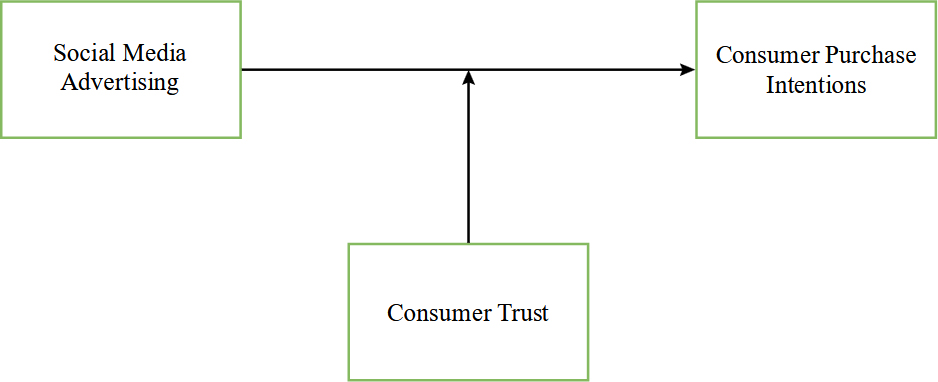
Fig. (1). Conceptual framework.
3. METHODOLOGY
The study used a structured survey questionnaire for the collection of primary data, which comprised closed-ended questions to measure social media advertising (Smith, 2014), consumer purchase intention (McKnight et al., 2002), and consumer trust (Naylor et al., 2012). A five-point Likert scale measured from based on strongly disagree (1) to strongly agree (5) was used, where participants were required mark their agreement level with the items, as suggested by (Russo et al., 2021). The respondents were consumers who were actively involved in online retail transactions in the e-commerce industry in Saudi Arabia. This group was chosen because it is a digitally active group, which is likely to respond to SMA and exhibit quantifiable CPI. In this study, consumer trust mainly refers to consumers’ confidence in the reliability, credibility, and security of transactions on retail e-commerce platforms in social media-based online shopping settings. The construct specifically focuses on trust in the process of purchasing through a platform, rather than on institutional trust or on individual components of institutional trust, such as trust in the payment gateway, logistics, and brand reputation separately.
The study used a purposive sampling scheme that included active users of retail e-commerce platforms in Saudi Arabia, as per (Mulisa et al., 2022). Participants were recruited through available customer subscription email lists and online consumer groups connected with key e-commerce websites, such as Amazon.sa as well as Noon alongside digital invitation channels. To be relevant to the study objectives, the selection was only targeted towards individuals who had shopped online in the retail e-commerce industry of Saudi Arabia.
The number of samples was calculated according to the sample size required which was recommended in the G*Power analysis for behavioural research (Gosalia et al., 2024). For an average effect size (f² = 0.15), significance level of 0.05, statistical power of 0.95, and three predictors, the minimum number of respondents required was more than 200. Thus, the final valid sample of 380 respondents was deemed suitable for a valid moderation analysis in the case of e-commerce sector of Saudi Arabia. This was the minimum sample size required to make a dependable inference. There were 410 responses to the 701 invitations, which depicted an approximate 58.48% response rate. A total of 30 questionnaires were omitted due to missing values or outliers, leaving 380 valid questionnaires. The method allowed for access to digitally engaged consumers which was relevant to the study context; however, the sample was non-probabilistic and could not be generalised to the entire population of Saudi online shoppers or to the wider population of similar online shoppers without conducting a wider study sampling.
Selection bias was reduced by applying clear inclusion criteria that targeted active online shoppers in the study. Non-response bias was considered by comparing the primary initial respondents (n1 = 30) and the late respondents (n2 = 30) and ensuring that there are no significant differences were found, reflected in (Wang et al., 2024) as well. Moreover, the Common Method Bias (CMB) was also evaluated to guarantee that the correlation between the self-reported measures of the surveys was not an artificially manufactured result due to trust or CPI in terms of SMA. However, the Harman single-factor test was used as suggested by (Howard et al., 2024), where 32% of the aggregate variance was calculated under the 50% threshold to show that CMB was not a serious concern. In addition, full collinearity VIF was applied to analyse the issue of CMB in the model, where VIF values lower than 3.30 Table 1 confirmed no issue of CMB in the model.
Table 1. Full collinearity VIF.
| VIF | |
| Social Media Advertising | 1.498 |
| Consume Trust | 1.498 |
To analyse the data, the study adopted the Preacher and Hayes moderation model in SPSS to test the statistical relationships and moderating role of consumer trust in the connection amongst SMA and CPI. This approach is appropriate for analysing interaction effects and moderating relationships, as proposed by (Igartua & Hayes, 2021) in their study.
All respondents were invited to voluntarily give their consent to contribute in the study. It was followed by provision of informed consent which comprised the study purpose and objectives, confidentiality of information, anonymity procedures, and the participant’s right to withdraw from the study at any point. A structured survey platform was used to assist in the efficient collection of information on the questionnaire, which was administered online. Respondents were obtained through purposive sampling using customer subscription email lists and major Saudi retail e-commerce platform-related online invitation mailing lists. Relevant data were collected from customers with online purchasing habits and engaged in e-commerce activities in Saudi Arabia.
4. RESULTS
4.1. Demographic Profile Analysis
The results in Table 2 related to the demographic characteristics of the study participants (n=380) are presented. Among the total participants, 55.26% were men and 44.74% were women. Among these participants, most of the participants, that is, 32.89% were in the age bracket of 26-35, 28.42% in 36-45 years, 18.24% in the age bracket of 18-25 years, and 20.27% in the age bracket of 46-55 years. Of the total participants, 31.58% held educational qualifications of high school or below, 28.95% held graduate degrees, 30.26% held master’s degrees, and 9.21% held PhDs. Lastly, 18.16% reported a monthly online shopping frequency of 1-2 times, 33.16% 3-5 times, 24.21% 6-10 times and 24.47% more than 10 times per month.
Table 2. Demographics.
| Demographic Category | Frequency (n) | Percentage (%) | |
| Gender | Male | 210 | 55.26% |
| Female | 170 | 44.74% | |
| Age Range | 18-25 | 70 | 18.42% |
| 26-35 | 125 | 32.89% | |
| 36-45 | 108 | 28.42% | |
| 46-55 | 77 | 20.27% | |
| Education Level | High School or below | 120 | 31.58% |
| Bachelor’s Degree | 110 | 28.95% | |
| Master’s Degree | 115 | 30.26% | |
| Doctorate / PhD | 35 | 9.21% | |
| Monthly Online Shopping Frequency | 1–2 times | 69 | 18.16% |
| 3–5 time | 126 | 33.16% | |
| 6–10 times | 92 | 24.21% | |
| More than 10 times | 93 | 24.47% | |
4.2. Assessment of Measurement Model
The measurement model of the current study is assed and evaluated for reliability and convergent validity by applying approaches such as Cronbach’s Alpha, Composite Reliability and Average Variance (AVE) suggested by (Kennedy, 2022).
As per results depicted in Table 3, it can be observed that there is a high factor loading ranged amid (0.754-0.903). This shows that an observed item in the survey questionnaire is strongly correlated with the underlying latent variable or construct. On the other hand, reliability is also found from the values of Cronbach’s Alpha and Composite Reliability which remained higher than a standard threshold of 0.7. In addition, Convergent Validity is also found as the AVE is observed to be above 0.5 for all constructs.
Table 3. Reliability.
| Latent Variables | Indicators | Factor Loadings | Cronbach’s Alpha | Composite Reliability (Rho_C) | Average Variance Extracted (AVE) |
| Consumer Purchase Intentions | CPI1 | 0.864 | 0.911 | 0.937 | 0.789 |
| CPI2 | 0.903 | – | – | – | |
| CPI3 | 0.897 | – | – | – | |
| CPI4 | 0.888 | – | – | – | |
| Consumer Trust | CT1 | 0.759 | 0.819 | 0.880 | 0.649 |
| CT2 | 0.866 | – | – | – | |
| CT3 | 0.838 | – | – | – | |
| CT4 | 0.754 | – | – | – | |
| Social Media Advertising | SMA1 | 0.816 | 0.844 | 0.895 | 0.682 |
| SMA2 | 0.880 | – | – | – | |
| SMA3 | 0.826 | – | – | – | |
| SMA4 | 0.778 | – | – | – |
4.3. Discriminant Validity
The HTMT values among the study variables, as shown in Table 4, are observed within the accepted level of 0.85 which supports the discriminant validity and shows that social media advertising, consumer trust, and consumer purchase intention are conceptually different constructs in the measurement model, which has no conceptual overlap and is separable from each other.
Table 4. Discriminant validity.
| – | CPI | CT |
| CT | 0.674 | |
| SMA | 0.574 | 0.632 |
4.4. Correlation Analysis
The results in Table 5 depict a robust and positive association between SMA and CPI (r = 0.671), suggesting that greater engagement with SMA results in higher purchase intention among e-commerce consumers in Saudi Arabia. Similarly, CT also depicts a positive correlation with CPI (r = 0.581) which indicates that trust increases the likelihood of consumers making online purchases from e-commerce platforms.
Table 5. Correlation.
| – | SMA | CPI | CT |
| SMA | 1 | .671*** | .577*** |
| CPI | .671*** | 1 | .581*** |
| CT | .577*** | .581*** | 1 |
Note: ***: showing significance at 1%.
4.5. Moderation Analysis using Preacher and Hayes
The PROCESS macro of SPSS (Model 1), as depicted in Table 6 with bootstrap samples of 5,000 with 95% bias-adjusted CIs, was assessed to analyse the moderation. The total model described a significant percentage of consumer purchase intention variance (R2 = 50.8%), demonstrating moderate explanatory power in the e-commerce setting of Saudi Arabia. The findings also show that SMA has a robust and direct connection with CPI (β = 0.620, p < 0.001), which reveals that persuasive content shared on social media is eventually linked with positive CPI. In addition, the findings also depicted that consumer trust has a substantial and constructive association with CPI (β = 0.437, p = 0.003), which implies that higher trust of consumers, the higher the CPI. Moreover, the moderating role of trust in the relationship between SMA and CPI was significant (β = 0.135, p = 0.030), with an effect size of ΔR² = 0.011. The interaction term bootstrap confidence interval also did not cover zero, which further proves the existence of a significant moderating role. Furthermore, the interaction plot Fig. (2) shows that the connection amongst CPI and SMA was positive at all consumer trust levels. The positive slopes shown in Fig. (2) for low, moderate, and high trust indicate an increase in purchase intention as a consequence of an increase in acquaintance to SMA, regardless of the trust level. In the second regression model (Fig. 2), the relationship is stronger at the high end of consumer trust, indicating that the positive effect of social media advertising becomes moderately stronger as consumer trust increases. This pattern provides a statistically significant test for moderating role of consumer trust. Nonetheless, the relatively weak interaction effect (ΔR² = 0.011) suggests that trust is more of a catalysing agent than a primary factor in the advertising–purchase intention relationship.
Table 6. Preacher and hayes.
| Model Summary | |||||||
| – | R | R² | MSE | F | df1 | df2 | P |
| – | 0.713 | 0.508 | 0.299 | 129.64 | 3 | 376 | < .001 |
| Regression Coefficients | – | – | – | – | – | – | |
| Predictor | B | SE | t | p | 95% LLCI | 95% ULCI | – |
| Constant | 0.349 | 0.49 | 0.71 | 0.477 | −0.615 | 1.312 | – |
| Social Media Advertising (SMA) | 0.62 | 0.143 | 4.33 | < .001 | 0.339 | 0.901 | – |
| CT | 0.437 | 0.1499 | 2.917 | 0.003 | 0.142 | 0.732 | – |
| SMA × CT | 0.135 | 0.062 | 2.18 | 0.03 | 0.013 | 0.257 | – |
| Test of Interaction Effect | – | – | – | – | – | – | |
| Interaction | ΔR² | F | df1 | df2 | p | – | – |
| SMA × CT | 0.011 | 4.75 | 1 | 376 | 0.03 | – | – |
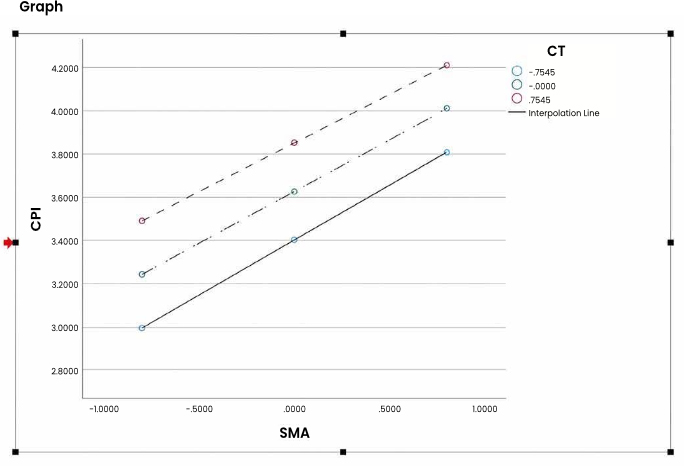
Fig. (2). Interaction plot.
5. Discussion
The results obtained in this study support the validity of H1, showing that the Saudi retail e-commerce industry has a strong association between SMA and CPI. It is consistent with the findings of (Yeo et al., 2020) who found that the interactivity feature, information rich feature, and brand image feature of social media ads have a positive relationship with online purchase behaviour. Similarly, (KV et al., 2021) found that celebrity endorsements, creative and eye-catching content, details, and appeal to emotions have a consistent relationship with purchase intent, confirming that persuasive and engaging digital content has a constant relationship with consumer attitude. This finding supports the behavioural intention studies that suggest a positive relationship between the persuasive communication and the behavioural intention in online purchasing environments, as proposed by the Theory of Planned Behaviour (TPB). This was found in studies of consumers’ responses to digital marketing messages.
The same study by (Khaleeli, 2020) revealed that, for the UAE alone, the contextual factors played an important role which did not significantly impact the CPI associated with the SMA. The difference may be due to cultural views on the credibility of ads. The results of the present study indicate that social media advertising has a positive relationship with purchase intention among Saudi E-commerce Users. This trend reflects the overall digital trend detected by (Akayleh, 2021), where social media user activity is growing and e-commerce is becoming more active. (Hasan & Sohail, 2021) reported similar findings, with interactive and culturally relevant advertising content positively associated with favourable consumer responses. (Ki et al., 2023) reported similar findings. The results of these analyses yield valuable evidence about the sampled population but need to be understood in the context of the study design and the characteristics of the sample. These observations offer a conceptual framework for understanding consumer responsiveness. This study empirically targets the SMA-CPI relationship and the moderating role of trust.
The Saudi socio-digital climate also describes a close connection. For instance, (Akayleh, 2021) elaborates that the rapid development of e-commerce, technological and digital infrastructure, and the adoption of social media platforms such as Tik Tok, Instagram, and Snapchat, as a part of everyday life will make people more exposed and receptive to SMA. Consumer perception and interaction with social media advertising are related to industry practices in Saudi e-commerce, such as influencer marketing, localised content, and credibility-enhancing messages. These behavioural responses are similar to those found by (KV et al., 2021) which shows that the consumer’s assessment of purchase-related responses results from persuasive marketing communications. Based on the observed trends in the Saudi e-commerce context, this study finds that the impact of advertising on consumer purchase intentions can be seen in the most relevant marketing communications in a persuasive manner and not through the mechanisms of specific behaviour theory, such as the TPB. Hence, the results suggest that an SMA carefully designed with reference to cultural and digital specifics is an effective way to develop a favourable attitude among consumers, which will lead to increased online buying intentions.
In relation to H2, the findings of the current study show that consumer trust moderates the association between SMA and CPI among the tested Saudi e-commerce users. Earlier studies have found that the moderation of trust is not universal but contextual. The situations of transactional uncertainty and weak regulatory oversight exhibited in Pakistan, for instance revealed in (Manzoor et al., 2020; Jabeen et al., 2024), are more likely to lead to higher levels of moderation. While situations of risk perceptions and high complexity of the banking system in Pakistan are likely to result in higher levels of moderation unveiled by (Otopah et al., 2024) also.
In the context of Saudi Arabia’s e-commerce market, there are many digital platforms to be explored, as well as a consistent increase in e-commerce activities and a fast-growing adoption of digital payments. As seen in this context, the findings show that trust plays an important role in influencing consumers’ reactions to SMD advertising.
(Coutinho et al., 2023; Ebrahimi et al., 2023) mention that customers’ purchase intentions are related to consumer beliefs regarding transactional reliability and the persuasiveness of an SMA. These perceptions stemmed from the familiarity with the platforms and the strong regulatory frameworks in the Saudi E-commerce landscape. Based on the results, it can be concluded that the relationship between social media advertisement and consumer buying intention is quite significant and significantly moderated by trust, which indicates that there is a significant interaction between the two. Although the interaction effect was statistically significant, it was not strong, indicating that trust is a contextual variable that affects the strength of the relationship between the variables. The results indicate that there can be different degrees of consumer trust among the E-commerce consumers regarding the effect of social media ads and purchase intention.
CONCLUSION
The current research findings validated that although SMA is a crucial aspect in persuading consumer attitudes and CPI to buy particular products in the Saudi Arabian e-commerce sector. While it was also uncovered that trust holds a substantial moderating role in the connection amongst SMA and CPI in the reviewed sector of the country. Thus, the appeal and interactivity of SMA are associated with the CPI of Saudi e-commerce retail customers, making product advertising a primary factor in the e-commerce scenario. Consumer trust is statistically significant as a moderator but is a kind of contextual conditioner of how hard advertising translates into intention, as opposed to being the main lever. Institutional safety, platform stability, and regulatory protection offer a consistent base of trust that allows companies to invest in the optimisation of creative and targeted advertising approaches, while ensuring trust that helps build long-term loyalty and strengthen the outcomes of marketing campaigns.
LIMITATIONS AND FUTURE RECOMMENDATIONS
Some limitations in the study include using self-reported responses from the surveys that may lead to bias in the responses and potentially reduce the causation of the study. Furthermore, the research examines only three variables and does not account for the other variables like perceived risk, cultural values or the characteristics of the platforms. Longitudinal and experimental study design, probabilistic sampling, and additional moderators should be explored in future studies. Comparative studies on interregional and platform level also provide a meaningful idea of the platform-specific impact on retail sales and understanding of the consumer behaviours in dynamic e-commerce environments.
POLICY IMPLICATIONS
The findings provide stakeholders with the e-commerce industry in Saudi Arabia with actionable recommendations. Ads containing elements that relate to the local culture, Arabic interactive content, and open product communication should be emphasised in order to boost purchasing responsiveness of Saudi e-commerce companies. However, for digital marketers to connect with the Saudi consumers, marketing efforts should be extended beyond segmentation and brought more of the data through short-form video marketing and mobile-centric promotions. Social media, including Meta and TikTok platforms, need to enhance the verification of ads and transparency of sponsored material. To preserve consumer trust and help Saudi Arabia reach the targets of its digital commerce Vision 2030 plans, regulatory bodies should beef up disclosure legislations and regulations in social media advertising, as well as digital privacy and payment security.
LIST OF ABBREVIATIONS
AVE | = | Average Variance |
CMB | = | Common Method Bias |
CPI | = | Consumer Purchase Intentions |
SMA | = | Social Media Advertising |
TPB | = | Theory of Planned Behaviour |
AUTHOR’S CONTRIBUTION
C.K.M. was responsible for the conception and design of the study, model implementation, empirical evaluation, data analysis and interpretation, visualization, methodological development, manuscript drafting, and critical revision of the manuscript.
ETHICAL STATEMENT & INFORMED CONSENT
The study complied with applicable institutional ethical standards and guidelines for research involving human participants. Formal ethics approval was not required in accordance with the applicable institutional guidelines. All participants provided informed consent before data collection after being informed about the study objectives, voluntary nature of participation, confidentiality, and their right to withdraw at any time. No personally identifiable information was collected, and all responses were kept anonymous and used solely for academic purposes.
AVAILABILITY OF DATA AND MATERIALS
The data will be made available on reasonable request by contacting the corresponding author.
FUNDING
None.
CONFLICT OF INTEREST
The author declares that there is no conflict of interest regarding the publication of this article.
ACKNOWLEDGEMENTS
Declared none.
DECLARATION OF AI
During the preparation of this manuscript, ChatGPT was used exclusively for language editing and improving clarity. All AI-assisted modifications were thoroughly reviewed, validated, and approved by the authors, who remain fully responsible for the accuracy, originality, integrity, and final content of the manuscript.
REFERENCES
Akayleh, F. A. (2021). The influence of social media advertising on consumer behavior. Middle East Journal of Management, 8(4), 344–366.
https://doi.org/10.1504/MEJM.2021.10037485
Al Halbusi, H., Soto-Acosta, P., & Popa, S. (2023). Analysing e-entrepreneurial intention from the theory of planned behavior: The role of social media use and perceived social support. International Entrepreneurship and Management Journal, 19(4), 1611–1642.
https://doi.org/10.1007/s11365-023-00866-1
Al Kurdi, B., Nuseir, M. T., Alshurideh, M. T., Alzoubi, H. M., AlHamad, A., & Hamadneh, S. (2024). The impact of social media marketing on online buying behavior via the mediating role of customer perception: Evidence from the Abu Dhabi retail industry. In Cyber security impact on digitalization and business intelligence: Big cyber security for information management: Opportunities and challenges. Springer International Publishing, pp. 431–449.
https://doi.org/10.1007/978-3-031-31801-6_26
Alanmi, M., & Alharthi, S. (2023). The impact of digital marketing on consumer buying behavior in Saudi Arabia: Brand popularity as a mediator. Journal of Business and Management Review, 4(6), 412–438.
https://doi.org/10.47153/jbmr46.6552023
Aldayri, A., & Hadwan, M. (2023). The utilization of augmented reality in Saudi Arabia e-commerce websites. Advanced Studies: Euro-Tbilisi Mathematical Journal, 16(Suppl. 2), 1–8.
https://doi.org/10.32513/asetmj/1932200823201
Alghamdi, F. S., & Nor, R. M. (2023). Evaluating e-commerce engagement factors in Saudi Arabia: Financial loss, identity theft, and privacy policies. International Journal of Professional Business Review, 8(12), e4035
https://doi.org/10.26668/businessreview/2023.v8i12.4035
Alharthey, B. K. (2024). Navigating digital marketing: Examining self-escapism attitudes and online buying intentions in Saudi Arabia. European Journal of Management and Marketing Studies, 8(4).
https://doi.org/10.46827/ejmms.v8i4.1640
Alkhalil, B. F., Zhuang, Y., Mursi, K. T., & Aseeri, A. O. (2024, December). E-commerce trust in Saudi Arabia: An empirical investigation using A/B testing. In 2024 8th International Symposium on Innovative Approaches in Smart Technologies (ISAS) (pp. 1–7). IEEE.
https://doi.org/10.1109/ISAS64331.2024.10845429
Al-Mushayt, O. S., Gharibi, W., & Armi, N. (2022). An e-commerce control unit for addressing online transactions in developing countries: Saudi Arabia case study. IEEE Access, 10, 64283–64291.
https://doi.org/10.1109/ACCESS.2022.3180329
Alotaibi, S., & Aljaafari, M. A. H. (2024). Social commerce in Saudi Arabia: Opportunities and challenges in a digital society. Sustainability, 16(24), 10951.
https://doi.org/10.3390/su162410951
Alqahtani, N. H., & Alqahtani, T. H. (2022). Optimal search engine marketing strategy customer behaviour: Case studies from Saudi Arabia. Journal of Economics, Administrative and Legal Sciences, 6(7), 143–162.
https://doi.org/10.26389/AJSRP.Q131021
Arab News. (2025). Saudi Arabia’s e-commerce sector sees 10% growth, official figures reveal. https://www.arabnews.com/node/2585413/business-economy
Azad, M. S., Khan, S. S., Hossain, R., Rahman, R., & Momen, S. (2023). Predictive modeling of consumer purchase behavior on social media: Integrating theory of planned behavior and machine learning for actionable insights. PLOS ONE, 18(12), e0296336. https://doi.org/10.1371/journal.pone.0296336
Coutinho, F., Dias, A., & Pereira, L. F. (2023). Credibility of social media influencers: Impact on purchase intention. Human Technology, 19(2), 220–237.
https://doi.org/10.14254/1795-6889.2023.19-2.5
Ebrahimi, P., Khajeheian, D., Soleimani, M., Gholampour, A., & Fekete-Farkas, M. (2023). User engagement in social network platforms: What key strategic factors determine online consumer purchase behaviour? Economic Research-Ekonomska Istraživanja, 36(1).
https://doi.org/10.1080/1331677X.2022.2106264
Edrees, M. E. A. (2025). The impact of electronic word of mouth on consumer purchase intention in the Saudi Arabian e-commerce fashion market: Exploring trends, credibility, and social media influence. International Review of Management and Marketing, 15(5), 323–333.
https://doi.org/10.32479/irmm.19997
Enehasse, A., & Sağlam, M. (2020). The impact of digital media advertising on consumer behavior intention: The moderating role of brand trust. Journal of Marketing and Consumer Research, 68, 22–32.
https://doi.org/10.7176/JMCR/68-04
Eye of Riyadh. (2025). KSA is one of the world’s most dynamic and fast-moving digital economies, Checkout.com report. https://www.eyeofriyadh.com/news/details/ksa-is-one-of-the-world-s-most-dynamic-and-fast-moving-digital-economies-checkout-com-report
Ezmigna, I., Alghizzawi, M., Alqsass, M., Abu-AlSondos, I. A., Abualfalayeh, G., & Aldulaimi, S. H. (2024, December). The effect of digital marketing on reducing reverse logistics costs in Saudi Arabia’s e-commerce market: A qualitative study. In 2024 International Conference on Decision Aid Sciences and Applications (DASA) (pp. 1–6). IEEE.
https://doi.org/10.1109/DASA63652.2024.10836435
Ghada, I. (2025). Cybersecurity in Saudi Arabia’s payments: Safeguarding the future of digital finance. Sharikat Mubasher. Available From: https://en.sharikatmubasher.com/media-hub/experts-thoughts/5050
Gosalia, V. V., Jasani, K. M., & Misra, L. S. V. (2024). Linking infant and young child feeding practices to Z-scores: Unraveling the impact on childhood stunting and wasting. Indian Journal of Community and Family Medicine, 10(1), 49–54.
https://doi.org/10.4103/ijcfm.ijcfm_81_23
Hamida, A. G. (2024). Exploring the adoption of e-commerce among small and medium enterprises in Saudi Arabia: A technology–organization–environment perspective. Digital Management Sciences Journal, 2(1), 1–17.
https://doi.org/10.62854/dmsj.v2i1.35
Hasan, M., & Sohail, M. S. (2021). The influence of social media marketing on consumers’ purchase decision: Investigating the effects of local and nonlocal brands. Journal of International Consumer Marketing, 33(3), 350–367.
https://doi.org/10.1080/08961530.2020.1795043
Howard, M. C., Boudreaux, M., & Oglesby, M. (2024). Can Harman’s single-factor test reliably distinguish between research designs? Not in published management studies. European Journal of Work and Organizational Psychology, 33(6), 790–804.
https://doi.org/10.1080/1359432X.2024.2393462
Igartua, J. J., & Hayes, A. F. (2021). Mediation, moderation, and conditional process analysis: Concepts, computations, and some common confusions. The Spanish Journal of Psychology, 24, e49.
https://doi.org/10.1017/SJP.2021.46
Ingriana, A. (2025). The influence of e-trust on consumer purchasing behavior in e-commerce. JUMDER: Jurnal Bisnis Digital dan Ekonomi Kreatif, 1(3), 16–31.
https://doi.org/10.1234/jumder.v1i3.26
Jabeen, R., Khan, K. U., Zain, F., Atlas, F., & Khan, F. (2024). Investigating the impact of social media advertising and risk factors on customer online buying behavior: A trust-based perspective. Future Business Journal, 10(1), 123.
https://doi.org/10.1186/s43093-024-00411-8
Kennedy, I. (2022). Sample size determination in test–retest and Cronbach’s alpha reliability estimates. British Journal of Contemporary Education, 2(1), 17–29.
https://doi.org/10.52589/BJCE-FY266HK9
Khaleeli, M. (2020). The effect of social media advertising and promotion on online purchase intention. Journal of Critical Reviews, 7(19). Available From: https://www.aaup.edu/about-university/faculty-members/majdi-khalili/publications/effect-social-media-advertising-and
Ki, C. W., Chow, T. C., & Li, C. (2023). Bridging the trust gap in influencer marketing: Ways to sustain consumers’ trust and assuage their distrust in the social media influencer landscape. International Journal of Human–Computer Interaction, 39(17), 3445–3460.
https://doi.org/10.1080/10447318.2022.2097785
KV, S., Kp, N., & Kamath, G. B. (2021). Social media advertisements and their influence on consumer purchase intention. Cogent Business & Management, 8(1), 2000697.
https://doi.org/10.1080/23311975.2021.2000697
Manzoor, U., Baig, S. A., Hashim, M., & Sami, A. (2020). Impact of social media marketing on consumers’ purchase intentions: The mediating role of customer trust. International Journal of Entrepreneurial Research, 3(2), 41–48. Available From: https://www.semanticscholar.org/paper/Impact-of-Social-Media-Marketing-on-Consumer%E2%80%99s-The-Manzoor-Baig/323e5cc2450c51fa49390b5e2871898fcad213f9
McKnight, D. H., Choudhury, V., & Kacmar, C. (2002). Developing and validating trust measures for e-commerce: An integrative typology. Information Systems Research, 13(3), 334–359. https://doi.org/10.1287/isre.13.3.334.81
Mulisa, F. (2022). When does a researcher choose a quantitative, qualitative, or mixed research approach? Interchange, 53(1), 113–131.
https://doi.org/10.1007/s10780-021-09447-z
Naylor, R. W., Lamberton, C. P., & West, P. M. (2012). Beyond the “like” button: The impact of mere virtual presence on brand evaluations and purchase intentions in social media settings. Journal of Marketing, 76(6), 105–120.
https://doi.org/10.1509/jm.11.0105
Olaopa, O., & Alsuhaibany, A. (2023). Economic diversification in Saudi Arabia: the role of information communication technology and e-commerce in achieving Vision 2030 and beyond. International Journal of Technological Learning, Innovation and Development, 15(2), 137-161.
https://doi.org/10.1504/IJTLID.2023.135347
Otopah, A. A., Dogbe, C. S. K., & Ahlijah, B. (2024). Digital marketing and purchase intention of bank services: the role of trust and engagement. International Journal of Bank Marketing, 42(7), 1920-1945.
https://doi.org/10.1108/IJBM-02-2023-0097
PwC (2024). Voice of the Consumer 2024 survey: Saudi Arabia findings, PwC. Available From: https://www.pwc.com/m1/en/publications/voice-of-the-consumer-2024-survey-saudi-arabia-findings.html
Rehman, S. U., Bhatti, A., Mohamed, R., & Ayoup, H. (2019). The moderating role of trust and commitment between consumer purchase intention and online shopping behavior in the context of Pakistan. Journal of Global Entrepreneurship Research, 9, 43.
https://doi.org/10.1186/s40497-019-0166-2
Rusidah, S., & Hairudinor. (2023). The role of digital marketing in the sustainable performance of Indonesian MSMEs: Do the online purchase intention and actual purchase decision matter? Transnational Marketing Journal, 11(1), 17–30. Available From: https://transnationalmarket.com/article-detail/?id=258
Russo, G. M., Tomei, P. A., Serra, B., & Mello, S. (2021). Differences in the use of 5- or 7-point Likert scale: An application in food safety culture. Organizational Cultures: An International Journal, 21(2), 1–17.
https://doi.org/10.18848/2327-8013/CGP/v21i02/1-17
Saima, & Khan, M. A. (2020). Effect of social media influencer marketing on consumer purchase intention and the mediating role of credibility. Journal of Promotion Management, 27(4), 503–523.
https://doi.org/10.1080/10496491.2020.1851847
Smith, T. M. (2014). Consumer perceptions of a brand’s social media marketing [Master’s thesis, University of Tennessee]. TRACE: Tennessee Research and Creative Exchange. Available From: https://trace.tennessee.edu/cgi/viewcontent.cgi?article=4332&context=utk_gradthes
Wang, K., Liu, Y., Hossain, S., & Nurul Habib, K. (2024). Who drops off web-based travel surveys? Investigating the impact of respondents dropping out of travel diaries during online travel surveys. Transportation, 53, 675–711.
https://doi.org/10.1007/s11116-024-10510-8
Yeo, S. F., Tan, C. L., Lim, K. B., Leong, J. Y., & Leong, Y. C. I. (2020). Effects of social media advertising on consumers’ online purchase intentions. Global Business and Management Research: An International Journal, 12(1), 89–106. https://www.gbmrjournal.com/pdf/v12n1/V12N1-9.pdf